The Olympic Trials Women’s disc: A Coronation and a Controversy

Val Allman came into Eugene as the defending two-time national champ in the discus, so she was already the queen of the event in this country, but her winning distances of 63.55m in 2018 and 64.34m in 2019 were less than regal, nothing like the sixty-nine-meters-plus throws that Croatia’s Sandra Perković and Cuba’s Yaime Pérez had produced in winning World and Olympic gold over the past ten years. 

They are the sovereigns of the sport at the world level, and for Val to ascend to their station she would need to one, start popping some huge throws, and two, demonstrate that she could throw big in a stadium under pressure. 

She took care of that first item last August with a 70.15m bomb that broke the American record, but that toss came at a throwers meet in Idaho which, in terms of pressure and atmosphere, is nothing like an Olympics or Worlds. That 70.15m was like a pro golfer carding a 67 on a Korn Ferry Tour event–impressive, but do it on a Sunday at the Masters and then we’ll talk.

Val showed signs that she might be ready to go big on the big stage when she made the final at the 2019 Worlds and then returned to Doha this May and took out both Pérez and Perković with a solid 65.57m toss–impressive because it was done overseas in a stadium against top competition.  

(Note: Do not be confused if you look up the Diamond League results and see Val listed as having placed second. She threw farther than everyone else at that meet but was denied the win by a new format instituted by the Diamond League seemingly to kill interest in the sport. I’ll touch on this more at a later date.)

Last week in Eugene, Val’s training sessions generated some intriguing gossip. I heard that one practice featured multiple throws over sixty-seven meters. Another began with numerous attempts rifled into the cage..followed by multiple throws over sixty-five meters. 

My spies also tell me that the ring at Heyward is very, very slick. Sometimes, the top throwers like it that way. But, sometimes an unusually fast surface can get in the head of even the best of the best and sow a little doubt. 

There would be pressure at the Trials, even for a clear favorite like Val. How would she respond? On Friday, in the qualification round, the throwing world got a chance to see.

The NBC live feed showed a few warm up throws before Val’s flight, and I noticed that she caged her final attempt. I don’t know how many warm ups she took. In 2019, she told me that she had developed the habit of taking only two, as that is all you get at some of the bigger comps. Assuming she did that on Friday, she had at most one decent throw prior to the competition. Stepping into the ring in a high pressure meet with your ears still ringing from the sound of your final warm up throw whanging into the cage cannot be good for one’s sense of well being, and when Val produced a round-one clunker that was not even worth marking, I started to wonder.

I’ve heard from many throwers that the pressure of a qualification round can be ghastly. The first women’s discus flight in Eugene provided a clear and awful illustration when Laulauga Tausaga, like Val a finalist at the Doha Worlds, went three fouls and out. 

With two throws left to earn her way to Saturday’s final, was Val starting to feel the pressure?

In round two she stepped in and smashed a Trials record of 70.01m, so…apparently not.

She passed her final qualification attempt, then on Saturday picked up where she’d left off. Her series of 69.45m, 69.92m, 66.36m (get that poop out of here!), 68.55m, 68.46m, foul, in a stadium, under pressure, makes her–in my opinion–the favorite to win gold in Tokyo.

True, there was nobody like Perković or Pérez to contend with on Saturday. The second place finisher was Micaela Hazlewood, who came up big with a PB of 62.54m–a fantastic throw, but one that posed no threat to Val. Again, though, I’ve spoken with some fine throwers who say that there is no pressure quite like the pressure at the Trials. Joe Kovacs touched on it after the men’s shot final on Friday night, saying that it will be easier for him to “go crazy” and smash some huge throws in Tokyo now that the burden of getting through the Trials has been lifted.

So, if Val can put together a series like that in Hayward Stadium (site of the 2022 Worlds, by the way) in the pressure cooker of the US Trials…well, all hail the queen.

And now the matter of who will join Val in Tokyo.

Back in the day, the key for an American track and field athlete to make the Olympic team was to achieve the Olympic standard set by World Athletics (formerly the IAAF) and to finish in the top three at the Trials. An athlete who finished in the top three but who had not achieved the Olympic standard during the set qualification window would be replaced by the next lowest Trials finisher who had hit the standard. 

This kind of thing never happened in events like the shot put where many competitors would have already achieved the Olympic standard prior to the Trials, and where you’d have to throw well above that standard anyway to have any chance of a top-three finish at the Trials. So, when the event ended, you knew that those three athletes out there struggling through a victory lap were the ones who would represent the US in the Olympics.

But in events like the javelin and, in some years, the hammer, where there were not a lot of Americans with the Olympic standard, things could get tricky.

Often, the qualification window extended a month or so beyond the Trials, so top-three finishers who had not hit the Olympic mark would go “standard hunting” in sanctioned meets whenever and wherever they could find them. If those standard-hunters failed, it opened the door for a lower Trials finisher to make the team provided they had achieved the Olympic mark. 

That made things a bit complicated for the athletes in those events and for fans of throwing, but one thing we all hung onto was the importance of hitting the Olympic standard.

The situation became a bit more muddied this year because after the 2016 Olympics, World Athletics made some changes in the Olympic qualifying process. They raised the Olympic standards to a borderline ridiculous level–for example, 77.50m in the men’s hammer, a distance that might get someone on the podium in Tokyo–and started compiling a points system that would carry equal weight as the qualifying standards. Athletes receive points for competing in sanctioned meets–with the number of points awarded depending on the quality of the meet. I assume they did this to encourage athletes to compete in a lot of meets rather than hitting the standard early in the qualification window and then laying low until the Games.

Now, any thrower coming into the Trials having either achieved the standard or holding a spot in the top thirty-two in the World Athletics point rankings would be considered as having qualified for the Games. 

If someone finished in the top three in Eugene but had not hit the Olympic mark and was not ranked in the top thirty-two, they could be replaced on the team by the next highest Trials finish who had done one or both of those things.

In the women’s discus, Val, Laulauga, Rachel Dincoff and Whitney Ashley had each achieved the Olympic qualifying mark of 63.50m. Kelsey Card had not, but she was ranked twenty-third on the World Athletics table. And this year, for the first time ever, that ranking carried equal weight with the qualifying standard.

So, when Lagi did not advance to the final, the contenders for Tokyo came down to Val, Rachel, Whitney, and Kelsey, along with anyone who might grab a spot in the top three and throw at least 63.50m in the process.

When the dust cleared on Friday night, Val and Rachel had cemented their spot on the team by finishing in the top three, but with Micaela possessing neither the Olympic standard or a ranking in the top thirty-two, the door was opened for either Kelsey or Ashley to take the third spot on the Tokyo squad.

Kelsey, by finishing ahead of Ashley, appears to have won that spot.

And that has caused some confusion.

Ashley, a veteran of the old standards-based system, assumed that she had made the team and this morning expressed her consternation in a video posted to Twitter.

Meanwhile, Micaela and her coach, Keith McBride, believe that she has until July 1st to either throw 63.50m in a sanctioned meet or to compete in however many meets it takes to move her into the top thirty-two on the points rankings. She currently sits fiftieth.

Stay tuned. More updates to follow!

What in the…? A report on the Olympic Trials Men’s shot

Well, that certainly lived up to expectations.

First time in history that five putters hit at least 21.84m. 

Joe Kovacs showed that, as was the case in the weeks leading up to the 2019 Worlds, he is rounding into form at the perfect time.

Payton Otterdahl seized the mantle as the next potentially great American shot putter.

Oh, and Ryan Crouser broke the world record.

He foreshadowed that with a first-round toss of 22.92m in the morning qualification round, and I was very surprised to see him step in the ring for a second attempt after he had emphatically secured his place in the final. Turns out, he was thinking he might be able to get the record then and there.

“I used a static start on the first throw,” he explained after the final. “Not my usual windup and shift. A static start is safer–less can go wrong, and the point this morning was to qualify for the final. But, that 22.92m was a massive PR with the static start, so I thought I could put a little bit more on it…but then I tightened up on the second throw and only hit 22.64m. After that, I  realized that World Athletics has a new rule that they take your shoes after a world record, so I wouldn’t have the right shoes for the final, so I decided to call it after that second throw.”

Yes, you read that correctly. He had to intentionally hold off on breaking the world record so that World Athletics did not take his shoes. 

If you are asking yourself what in the hell is going on with the sport of shot putting, if maybe we’ve entered a very weird alternate universe where a guy can choose whether he wants to break a thirty-two-year-old record in the morning or the evening, imagine for a second how Joe Kovacs must feel. His best effort today of 22.34m was a monster toss, the kind of distance that only the best of the best have achieved, further evidence that Joe might in fact be the best putter that ever lived…if not for Crouser, who beat him by over a meter. 

Joe, by the way, remains confident. “I’m slow playing this season,” he said after the final. “My job here was to punch the ticket to Tokyo. I love to go crazy, but I had to keep myself regulated. Now, I’m excited to go to Tokyo.”

The drama here turned out to be the battle for third. Darrell Hill, the favorite to take that spot and a man who might one day be recognized as an all time great himself, struggled just enough to let Otterdahl, who afterwards would call this the “best day of my life” snach it from him.

Not that Darrell made it easy. His 21.13m seemed like it might have been enough to disabuse the youngsters like Otterdahl, Jordan Geist, Josh Awotunde, and Andrew Liskowitz of any notion that they might contend for a spot on the podium, but the youngsters just kept coming.

Otterdahl answered with 21.30m to seize the third spot, Darrell came back with 21.24m, Otterdahl fouled a throw near the 22.00m line, Darrell knocked him out of third with a fifth-round 21.89m, and Otterdahl came right back with a 21.92m PB that held up as Darrell finished with a foul.

Meanwhile, the other young bucks did not sit idly by. Awotunde finished with a PB of 21.84m, Liskowitz a season’s best of 20.97m, and Geist a season’s best of 20.80m.

All, too, can say they were part of history, as can the sport’s own mountain man, the venerable Kurt Jensen who himself hit a season’s best of 20.62m before being given the unenviable task of taking the throw just after Crouser’s record. He responded with a toss of 19.99m, a world class distance and a mere eleven feet short of Crouser’s mark.

Back to Otterdahl, his achievement on this night was all the more remarkable considering that he’d struggled to find his form all season, and as recently as May 22nd turned in a 20.25m clunker that got him tenth at the USATF Throws Fest. 

In the intervening weeks, he and his coach, Justin St.Clair, spent some quality time ironing out a few technical flaws, the fixing of which, in the words of Justin, “boosted the mental confidence.”

Truer words…

There is much else to report from this momentous Day One of the Trials, including a seventy-meter bombola from Val Allman, but that will have to wait for another day.

Right now, it is off to sleep for me, and likely a night filled with dreams of Joe Kovacs, Ryan Crouser, Payton Otterdahl, going crazy, godzilla style on the rest of the field in Tokyo.

Trials Tidbits: Friday Edition

The Dana Pounds Rule

There will be an automatic qualifying mark for each of the throwing events at the Trials, but what exactly that mark will be for each event seems to be a mystery. I have spoken with several coaches and athletes and have yet to find anyone who knows for sure. Several have speculated that it will be the Olympic qualifying distance, which seems kind of harsh as those distances are extremely beefy this year. 

In the men’s hammer, the Olympic standard is 77.50m, a mark that will likely get someone into the top five in Tokyo. In the women’s disc, it is 66.00m–again, a distance that will get anyone who throws it at the Games pretty darn close to a medal. 

One reason to have an auto qualifier at the Trials should be to allow the best throwers a chance to go “one-and-done” and save energy for the final. Why then, use such tough marks?

Sean Donnelly pointed me in the right direction. “I think,” he explained, “that it has something to do with Kara Winger and the 2008 Trials.”

I went to the source, and it turns out that Kara was tangentially involved, but not the reason for USATF using such high auto qualifiers.

The person in question turns out to have been Dana Pounds Lyon, currently a coach at the Air Force Academy and of Kara Winger. 

According to Kara, at the 2008 Trials, Dana “threw 58 meters on her first attempt in qualifying with the auto mark set at around 54 meters. So, they made her stop.”

Why would the officials have had to “make” Dana stop throwing when it is most people’s goal to go one-and-done in the prelims? 

Because she had not yet achieved the Olympic A standard, which Kara estimates was in the 60.50m to 61.00m range. And, according to Kara, Dana was feeling “awesome” in the prelims and wanted very much to take two more whacks at that standard.

And, there is a sad coda to this tale.

“Dana threw at one more meet after the Trials, and as the heartbreaking story goes, hugged the foul line to get every last inch of distance, but couldn’t stay behind it on a giant throw.”

She did not end up qualifying for Beijing, and the memory of that has made Kara all the more determined to make the Tokyo squad and finally give Dana an Olympic experience.

This Just In

Well, I just watched the live stream of the men’s shot prelims, and Ryan Crouser opened at 22.92m, well past the Olympic standard of 21.10m. He then stepped in and took another throw (which went 22.64m) before passing his final attempt. So, they apparently are giving one-and-done folks the option of continuing.

Stability, Part 1

When I asked Rudy Winkler to explain the factors that have allowed him to blossom into an eighty-meter thrower, he emphasized stability. It is no easy task for a post-collegiate thrower in this country to find a way to stay in the sport long enough to reach their prime. USATF does not provide much funding, and endorsements are hard to come by, even for the top performers. World champions Tom Walsh and Daniel Stahl, for example, currently have no shoe contract.

So, it is up to the athlete to figure out a way to eat and train and get coached and pay the rent. Rudy has recently taken a job with a cyber security firm whose CEO is a former Rutgers University hammer thrower. They have, he says, been very understanding about his need to take time off for competitions. 

“And the money has been very helpful,” he explained. “I don’t have to go into competitions worrying about prize money or anything like that. I can just compete.”

Rudy has also settled in with his longtime coach Paddy McGrath, with whom he has worked since high school. 

North Carolina throws coach Amin Nikfar also coaches hammer contender Alex Young, and he told me that stability has been a big factor for all the participants in the recent American hammer surge.

“Rudy has been with Paddy forever,” he pointed out. “Daniel Haugh has a great thing going with Mike Judge. And Alex has managed to follow me around the country, to Stanford and now North Carolina. Maintaining our relationship as coach and athlete has given him the stability he needed to develop.”

Discus thrower Kelsey Card has been able to remain in Madison, Wisconsin training with her college coach, Dave Astrauskas since graduating from the University of Wisconsin in 2016. Kelsy works as a marriage and family therapist which, according to Coach Astrauskas, gives her the flexibility to train. 

Speaking of stability, my marriage is going great, but if my wife and I ever hit a tough patch, I’m calling Kelsey. Here’s how I imagine it going:

My Wife: “All he ever does is watch throwing videos!”

Kelsey: “That is a perfectly normal activity.”

The Rings

The word out of the NCAA meet was that the two shot put rings have very different surfaces. One is super fast. As I am writing this, the shot qualification just finished and all the expected contenders advanced, so I do not know if the quality of the surface had any effect on the competition.

I’m told that the discus ring is fast as well. Luckily, the competition rings were open all week for athletes to try out, and these folks are the best at what they do, so they should be ready even on an unusually quick surface.

One Last Thing

NCAA shot and disc champ Turner Washington did not compete in the shot today due, I am told, to a sore groin muscle that he has been dealing with for several weeks. Turner will, however, compete in the discus.

Nerds of Throwing, assemble! ITCCCA presents the best clinic ever!

The 2021 ITCCCA Virtual Clinic begins on Thursday, March 18th, and for throws aficionados, rarely will life be better.

Want to learn about the glide shot from someone raised in the system that perfected it? On Saturday, March 20th, Germany’s René Sack will break down the glide technique and show you the drills you’ll need to help your athletes master it.

Want to learn about discus throwing? One of American’s discus greats, Suzy Powell-Roos will open the clinic on Thursday at 6:00pm CST will the full treatment–a technical overview including all-important drills.

Andy Bloom and Scott Bennett will provide their take on the discus on Friday, March 19th at 7:40pm CST, as will…

…Maggie Ewen as part of her Sunday presentation “The Shot and Discus Journey of Maggie Ewen.”

That’s not enough for you? How about the most successful discus coach of all time…

…Vésteinn Hafsteinsson? On Sunday, March 21st at 10:40am CST, Vésteinn will present a comparison of the techniques of Daniel Stahl, Fedrick Dacres and Andrius Gudzius. Vésteinn will also compare the rotational shot styles of Maggie Ewen, Fanny Roos, and Anita Marton. Speaking of rotational shot, Andy and Scott will give us their version on Thursday at 7:40pm CST, and on Friday at 6:00pm CST…

…Jeff Rebholz of Illinois State University will detail his approach to converting a glider into an outstanding spinner.

Maggie will also discus rotational shot technique as part of her Sunday talk, and on Saturday, March 20th at 9:00am, she will expound on physical training (lifting etc…) for young throwers.

All of these presentations will be live, with the opportunity to submit questions throughout.

ALSO: ATTENDEES WILL HAVE ACCESS TO VIDEO REPLAYS OF THESE PRESENTATIONS FOR THREE WEEKS.

Register now!

Vésteinn Hafsteinsson to present at the 2021 Virtual Clinic

Vésteinn Hafsteinsson is the most successful discus coach in the history of the sport. Under his guidance, Gerd Kanter won gold at the 2007 World Championships and 2008 Olympics. Daniel Ståhl became his second World Champion in Doha in 2019. Vésteinn also coached shot putter Joachim Olsen to a silver medal in the 2004 Olympics, and currently trains Sweden’s Fanny Roos, the 2021 European Indoor shot put silver medalist.

Don’t miss this opportunity to learn from one of the sport’s greatest coaches when he presents at the 2021 ITCCCA Virtual Clinic on Sunday, March 21st at 10:40am CST.

Vésteinn will discuss technical variations among several world class putters and discus throwers as a way of illustrating sound fundamentals. Attendees of this live presentation will be able to submit questions throughout, and will have access–for a limited time–to a video replay.

The 2021 ITCCCA Virtual Clinic will begin on Thursday, March 18th with sessions by Suzy Powell-Roos, Andy Bloom and Scott Bennett. Friday’s sessions will feature Jeff Rebholz of Illinois State University and a second presentation by Andy and Scott.

The weekend speakers will be Maggie Ewen, Rene Sack, and Vésteinn.

We hope you join us next week for one of the best throws lineups ever put together!

Suzy Powell-Roos to present at the 2021 ITCCCA Virtual Clinic

Suzy Powell is one of the most decorated female discus throwers in American history.  She is a 3x Olympian and former American record-holder with a PR of 69.44m/227’9.”  A product of the great UCLA throwing program, Suzy has been ranked among the top 10 discus throwers in the world numerous times.  Currently she coaches throws at Modesto Junior College in Modesto California.

Suzy will present at this year’s ITCCCA Virtual Clinic on Thursday, March 18th at 6:00pm CST. Suzy’s talk is titled, “Throw Like a Girl—A systematic approach to learning and coaching the discus throw.”

Attendees will be able to submit questions throughout this live presentation and will also–for a limited time–have access to a video replay via Coachtube.

Don’t miss what promises to be a great session with one of the best discus throwers this country has produced!

Andy Bloom and Scott Bennett to Present at the 2021 ITCCCA Virtual Clinic

That man is jacked up, and you will be too when you check out the lineup at this year’s ITCCCA Virtual Clinic.

Olympian (and one of the greatest shot/disc combo throwers in history) Andy Bloom will join the man who coached him to throwing greatness, Scott Bennett, for two sessions at this year’s clinic.

On Thursday, March 18th at 7:40pm CST, Andy and Scott will reveal their insights into rotational shot putting.

They will return on Friday, March 19th, also at 7:40pm CST to discuss discus technique.

Each session will feature substantial use of video to illustrate drills and technical points. Attendees will be able to submit questions throughout these live presentations and will also–for a limited time–enjoy access to a video replay via Coachtube.

Register now!

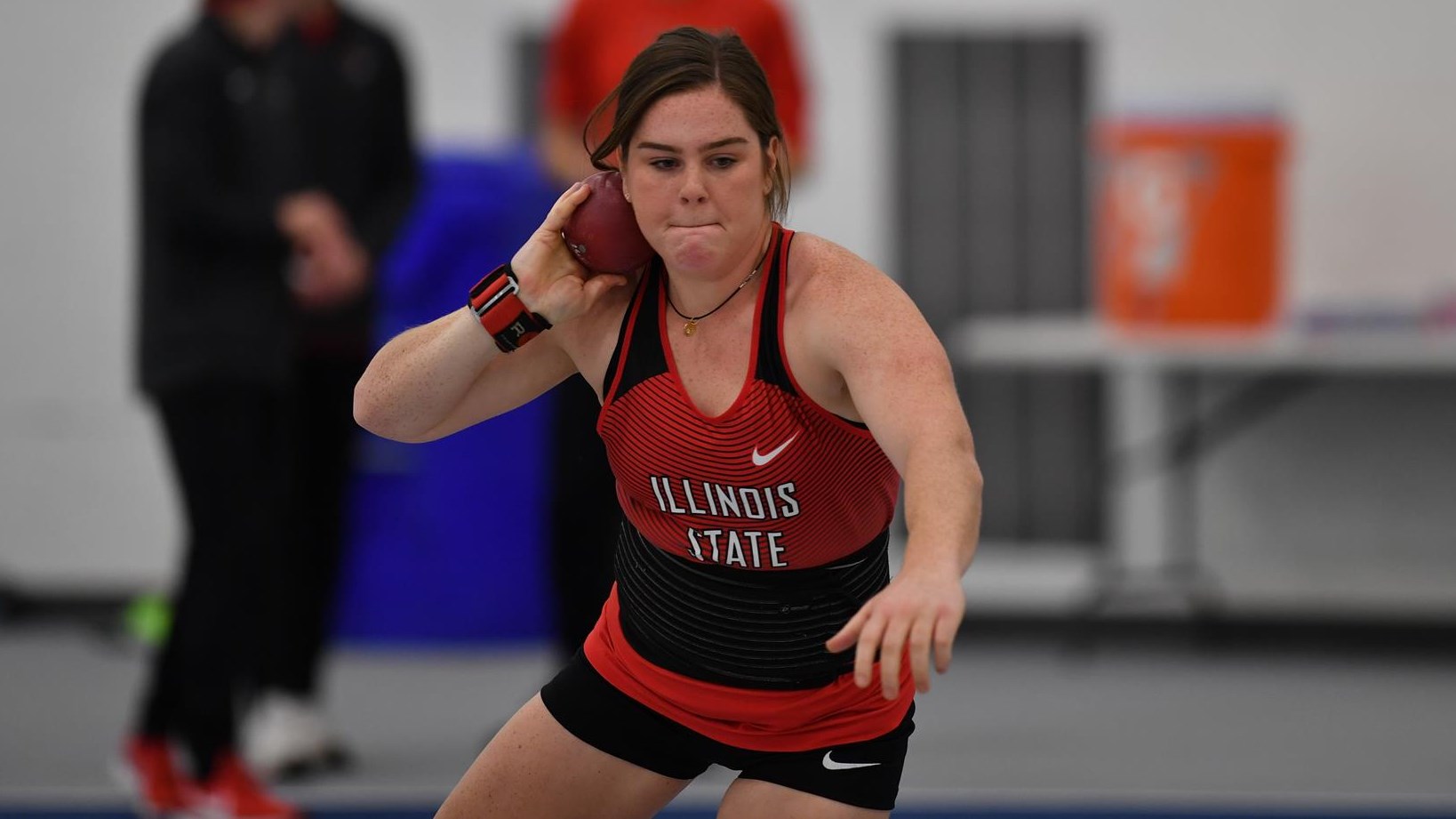
Illinois State University throws coach Jeff Rebholz to present at the 2021 ITCCCA virtual clinic

Jeff Rebholz, the outstanding throws coach at Illinois State University, will present at the 2021 ITCCCA Virtual Throws Clinic. Jeff’s session will take place on Friday, March 19th at 6:00pm CST.

Jeff will speak on rotational shot putting technique. His primary focus will be explaining the methods he uses to to transition a putter from the glide to rotational technique.

Jeff’s session will provide valuable insight for coaches at any level who want to teach sound technique to an athlete new to the rotational style.

Attendees will be able to submit questions throughout this live presentation, and will be given access–for a limited time–to a video replay on Coachtube.

Register now!

Maggie Ewen to present at the 2021 ITCCCA Virtual Clinic

Maggie Ewen, arguably the greatest thrower in NCAA history (she won, over the course of her career, the shot, disc, and hammer) and fresh off a PB shot put toss of 19.54m, will present at this year’s ITCCCA Virtual Clinic.

On Saturday, March 20th at 9:00am CST, Maggie will discuss “Physical Preparation for the Throws.” In that talk, Maggie will describe the methods she used in high school and beyond to build the power output necessary to make an implement go far.

On Sunday, March 21st, also at 9:00am, Maggie will present on her “Shot Put and Discus Journey.” In this session, she will examine her technique development over the years in each event.

Attendees will be able to submit questions throughout these live presentations, and will also–for a limited time–have access to a replay on Coachtube.

Register now!

René Sack to present on Glide Shot put Technique at the 2021 ITCCCA Virtual Clinic

The glide shot put lives! At last week’s European Indoor Championships, four of the top six finishers were gliders, including Germany’s Sara Gambetta. This year’s virtual ITCCCA clinic will feature Sara’s coach, René Sack, himself a former world class glider.

Nobody knows glide shot putting like the Germans, and this is a unique opportunity to learn from a coach who knows the German approach to the glide inside and out.

René will present on Saturday, March 20th at 10:40am CST. Attendees will be able to submit questions throughout this live production, and will also have access to a recorded version on Coachtube for a limited time.

Speaking of Coachtube, you can currently purchase a talk the René gave last summer on the discus. That presentation may be found here.